


How New Yorkers really feel about Zohran Kwame Mamdani and his 2026 plans for their city
- Ask Medicaid Florida

- Nov 8, 2025
- 7 min read
Updated: Mar 1
Here’s a detailed article about Zohran Mamdani. It covers his personal life, background and a breakdown by the key phrases you asked about: Zohran Mamdani wife, Zohran Mamdani networth, Zohran Mamdani ethnicity, Zohran Mamdani political views, Zohran Mamdani religion, Zohran Mamdani policies, Zohran Mamdani merch, Zohran Mamdani polls.
Early life & background
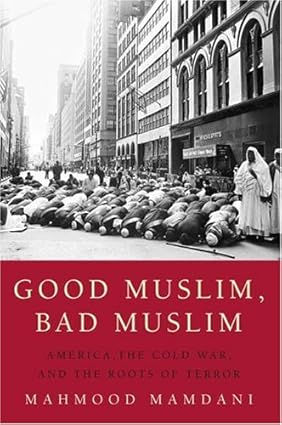
Zohran Kwame Mamdani was born on October 18, 1991 in Kampala, Uganda. His parents are Mira Nair (Indian-American filmmaker) and Mahmood Mamdani (Indian-origin Ugandan academic) — giving Zohran a rich, multi-continent heritage.
When he was about five years old his family moved to Cape Town, South Africa, then around age seven they settled in New York City.
He attended public schools in NYC, later did his Bachelor’s degree in Africana Studies at Bowdoin College (2014) before entering public life.
So the foundational frame: immigrant background, trans-continental upbringing, academic family roots.
Zohran Mamdani ethnicity
“Zohran Mamdani ethnicity” is a meaningful phrase because his identity plays into his political narrative.
He is of Indian descent through his parents.
He was born in Uganda and lived in South Africa as a child, then moved to the U.S.
He identifies as a New Yorker, but has described his identity as layered: Indian, Ugandan, American.
Thus: Indian heritage, Ugandan birthplace and childhood, American citizenship. That mixture is often cited when analysts describe his “global DNA”.
Zohran Mamdani religion
Regarding “Zohran Mamdani religion”
He is Muslim.
Specifically, in many profiles he is described as the first Muslim mayor or first Muslim candidate of his kind in NYC context.
He drew attention in his campaign for being a Muslim candidate who visited many mosques in NYC, and the subject of Islamophobia in his run.
So: religion = Islam (Muslim), which is part of his identity and public narrative.
Zohran Mamdani wife
Turning to the phrase “Zohran Mamdani wife”. There are some available details:
According to some reports (for example in Indian Express), Zohran Mamdani married Rama Duwaji, a Syrian artist/illustrator, in 2025.
The marriage is noted in sources but details like wedding date, location, biography of spouse are less thoroughly reported in mainstream US outlets.
So: yes, he is married; wife’s name = Rama Duwaji (information comes from multiple sources).
Zohran Mamdani networth
For “Zohran Mamdani networth”:
Various media outlets estimate his net worth at around US $200,000.
Prior to being mayor or mayor-elect, his main income came from his role as New York State Assembly member (salary listed about US $142,000) and modest other sources.
There are reports of discrepancies or scrutiny in his filings: the purchase of land in Uganda (4 acres) valued at between US $150,000 – 250,000 appears in disclosures.
When he steps into the mayor role his salary will increase (for NYC mayor).
Therefore: estimated net worth ~US $200,000; modest compared to many politicians, though his family background may complicate full picture.

Zohran Mamdani political views
“Zohran Mamdani political views” covers his ideology, positions, and public advocacy. Key points:
He describes himself as a democratic socialist and is a member of the Democratic Socialists of America (DSA) and member of the Democratic Party.
His public rhetoric: he aims to challenge status quo politics, represent working-class, immigrants, and affordability issues.
On major issues: for example his stance on Israel/Palestine: he has criticized the Israeli government and taken pro-Palestinian positions; he has also faced criticism for it and accusations of antisemitism.
On immigration and enforcement: he has been vocal against aggressive ICE/immigration enforcement in NYC.
On policing/public safety: his approach is more oriented to addressing root causes (affordability, housing, transit) rather than traditional “law and order” policing frames.
In short: progressive/left-of-centre views, with emphasis on economic justice, housing, transit, affordability, immigrant rights, and critical of status-quo power structures.

Zohran Mamdani policies
For “Zohran Mamdani policies” — what he proposes, what he’s campaigned on:
One major theme: housing affordability. He has called for rent freezes (or stronger tenant protections), large scale affordable housing build-out.
Free public transit: he has advocated for fare-free buses in NYC.
Universal childcare: part of his platform includes public childcare for children under a certain age.
City-owned grocery stores at wholesale prices: to combat the high cost of living, especially food costs.
Tax increases on the wealthy / corporations to fund these programs.
Public safety: he supports reform of policing and focusing on economic investments rather than strict enforcement.
Thus his policy agenda is bold and broad: affordability + transit + housing + childcare + tax equity + reform.
Zohran Mamdani merch
On “Zohran Mamdani merch”
There is an official campaign merchandise store: “Supporters of Zohran Webstore”.
Campaign reporting notes that his team used free merchandise distribution (e.g., pop-up screen-printing event handing out free shirts and tote bags) as part of grassroots outreach.
On marketplaces such as Etsy there are listings branded for Zohran Mamdani (t-shirts, tote bags, hats, stickers) though many are independent sellers.
Therefore: yes, there is merch associated with Zohran Mamdani’s campaign and supporters.
Zohran Mamdani polls
“Zohran Mamdani polls” refers to his standing in surveys/elections. Key facts:
In June 2025, he ran in the democratic primary for NYC mayor and polling showed him closing the gap with former Governor Andrew Cuomo. For example, a poll showed Mamdani at 52% vs Cuomo 48% in a hypothetical.
His campaign momentum surprised many observers; his polling surge was cited in multiple outlets.
Poll numbers were a major factor in discussions of how far left candidates might win in major cities.
Thus: his polls show a strong upward trajectory, surprising many analysts, and his primary win was seen as a real upset.
Putting it all together
Zohran Mamdani presents a profile with several intersecting identities and political appeals:
He is young (born 1991), first-generation immigrant (Uganda→USA), Indian heritage, Muslim faith.
His policy platform is explicitly progressive and oriented toward economic justice, affordability, transit, housing, childcare.
He uses his identity both as a narrative (multicultural background) and as a political asset.
Despite coming from an academically and culturally prominent family, his net-worth is modest relative to many politicians (~US $200k).
His campaign merchandising and branding show modern grassroots engagement, using apparel, print, social media.
Polls showed strong momentum and positioned him as the surprise front-runner in a major city mayoral race.
Considerations & caveats
While net worth is estimated at ~US $200,000, filings show land holdings in Uganda and other assets which invite scrutiny. Public disclosures can vary.
Campaign platforms (rent freeze, free buses, universal childcare) are ambitious; implementation will face budgetary, legal and administrative constraints. Analysts caution about “policy vs. governance” gap.
His religious and ethnic identities have been subject of attacks (Islamophobia, identity criticisms) in his campaign.
Polling data is a snapshot; the general election stage may differ from primary performance.
Why this matters
Zohran Mamdani is significant because:
He represents an expansion of representation: first Muslim candidate of his kind in NYC, first Indian-origin mayor-candidate for the city, young progressive leader.
His platform and background reflect changing dynamics in American urban politics: affordability crisis, immigrant communities, younger voters, progressive populism.
How he governs (or fails) will send signals for similar progressive campaigns nationwide.
Related Mamdani articles you will enjoy
Democratic socialism, according to Zohran Mamdani
New York City’s Mayor-elect Zohran Mamdani was the Democratic party’s candidate in the election, but he proudly describes himself as a democratic socialist alongside left-wing lawmakers like Sen. Bernie Sanders of Vermont and Rep. Alexandria Ocasio-Cortez of New York.
Mamdani quoted the most famous American socialist, Eugene Debs, in his acceptance speech Tuesday night and talked about doing more for “working people” as opposed to the rich.
There’s a fair amount of confusion and fear generated in the US by the term “socialist,” which is associated with repressive societies like Communist China, the Union of Soviet Socialist Republics, USSR, North Korea or Cuba. Read full article.
House GOP clashes over ‘ludicrous’ bill to defund NYC under Mamdani
The only Republican lawmaker representing one of New York City’s boroughs in Congress is lambasting members of her own party for seeking to defund the Big Apple after socialist mayor-elect Zohran Mamdani’s win.
Staten Island Rep. Nicole Malliotakis told The Post Friday that she will “push back on any attempt” by fellow congressional Republicans to “punish” New York City.
Rep. Buddy Carter (R-Ga.) told Fox News on Thursday he was introducing a new bill, the Moving American Money Distant from Anti-National Interests Act, or MAMDANI Act, to block federal funding for the Big Apple. Read full article.
Wrap up
Zohran Mamdani’s rise represents a turning point in New York City politics. As a young, immigrant-born leader of Indian and Ugandan heritage, he embodies a new generation of progressive governance focused on equity, affordability, and representation. His policies on housing reform, public transit access, and economic justice have challenged the status quo, drawing both strong grassroots support and criticism from establishment figures. Mamdani’s story reflects the broader shift in American urban politics — a move toward leaders who merge activism with public service and prioritize working-class concerns over corporate influence. His modest net worth and community-driven campaigns reinforce his image as a candidate connected to everyday New Yorkers rather than elite interests. Whether his ambitious vision can translate into sustainable policy remains to be seen, but his ascent has already reshaped the city’s political conversation. Zohran Mamdani stands not just as a symbol of diversity and change, but as a case study in how identity, conviction, and grassroots energy can redefine what political leadership looks like in the 21st century.
Four words for president Donald Trump
"Turn the volume up"
About the Author
Ask Medicaid Florida is a trusted independent author focused on simplifying Medicaid news, policy updates, and healthcare resources for Florida residents. With a mission to make complex Medicaid issues understandable, Ask Medicaid Florida provides clear, factual, and timely insights that help readers stay informed and empowered. "You are valued, thank you for visiting our website".
Disclaimer
This article may contain Amazon affiliate links . Ask Medicaid Florida is an Amazon Associate Partner. We earn a commission on all qualified purchases (at no additional cost to you). This website is for informational purposes only. Read full disclaimer.


The biggest problems New Yorkers face in 2026 center around the ongoing affordability crisis (primarily driven by high costs for housing, childcare, and healthcare), compounded by significant fiscal challenges at the state and city levels due to anticipated federal funding cuts and growing budget gaps. 🤔
As a New York resident, I’ve been watching Zohran Mamdani closely. He brings fresh energy and progressive ideas to city politics, especially on housing and social equity. I appreciate his focus on community engagement and transparency, but I’m curious to see how his policies will handle real-world challenges, like budget constraints and city infrastructure. So far, he seems thoughtful and committed, but only time will tell if his vision truly benefits all New Yorkers.